
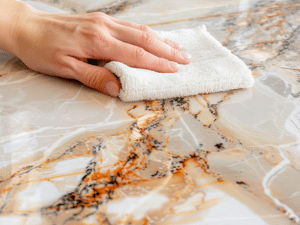
Murphy’s Oil on Natural Stone?
Is Murphy’s Oil Soap Safe for Stone? Here is what you need to know before you pick up that bottle.
If you own natural stone or Quartz, you’ve probably heard this frequently from your PROS: always clean with a stone-safe, pH-neutral cleaner. It’s the gold standard recommended by stone care experts (including us) and the surest way to protect your investment. But what happens on the day you run out of your regular cleaner?
Enter Murphy’s Oil Soap—a product most people associate with wood furniture and floors. While it should not replace your everyday stone cleaner, it can be used safely on many stone surfaces when you’re in a pinch. The key is knowing when, where, and how to use it without compromising your stone.
Why Murphy’s Can Work — Occasionally
Murphy’s is essentially a mild, vegetable-oil-based soap. When properly diluted, it has a near-neutral pH and contains no harsh solvents or acids. That’s why it’s gentle on wood—and also why it won’t etch calcium-based stones like marble or travertine.
Think of it as a temporary, mild cleaner — not a replacement for a dedicated stone-safe product.
When Murphy’s Oil Soap Works Well
If you’ve run out of your preferred pH-neutral stone cleaner and need a quick solution, Murphy’s may be suitable for:
- Marble and limestone floors needing light, everyday cleaning
- Travertine, especially honed or tumbled finishes
- Slate and other softer stones, where a touch of richness is desirable
- Soapstone countertops, which are often maintained with oils anyway
The small amount of oil in Murphy’s can give honed or textured surfaces a slightly warmer, richer appearance.
How to Use It (Only When Necessary)
If you rely on it occasionally:
- Dilute properly. Straight from the bottle is too strong and may leave residue. Use the label ratio—typically about 1/4 cup per gallon of warm water.
- Apply lightly, with a mop or soft cloth.
- Rinse well. Otherwise, it may leave a film that attracts dirt. A quick clean-water rinse solves this.
When NOT to Use Murphy’s
Skip Murphy’s if:
- You have polished granite or quartzite, which can show streaks
- Your stone has a topical coating, like an acrylic or wax—oil can haze it
- You’re doing a deep clean or removing heavy soil (you’ll need an alkaline stone cleaner for that)
A PRO Perspective
Some stone care professionals occasionally use Murphy’s as a maintenance refresher between deeper cleanings, especially on honed stone. But moderation is key—overuse can cause buildup, dulling, or slipperiness.
Bottom Line
Murphy’s Oil Soap isn’t a replacement for a high-quality, stone-safe pH-neutral cleaner (like the ones we recommend). But in a pinch, with proper dilution and rinsing, it can safely clean certain natural stone surfaces without causing damage.
Use it as a backup option—not your daily go-to—and your stone will be just fine.
By Fred Hueston. This article is one of a series of Caring For It™ articles written and published on behalf of Surface Care PRO Partners.
